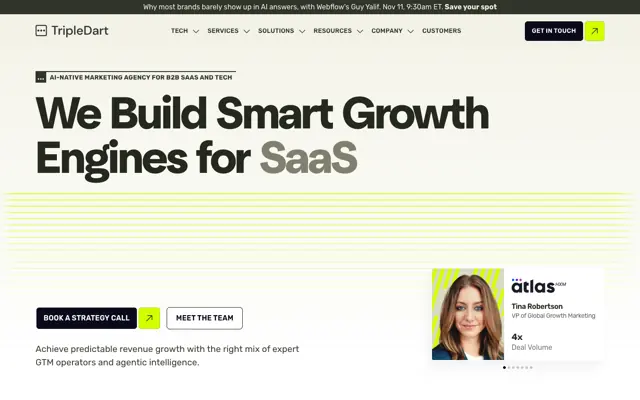
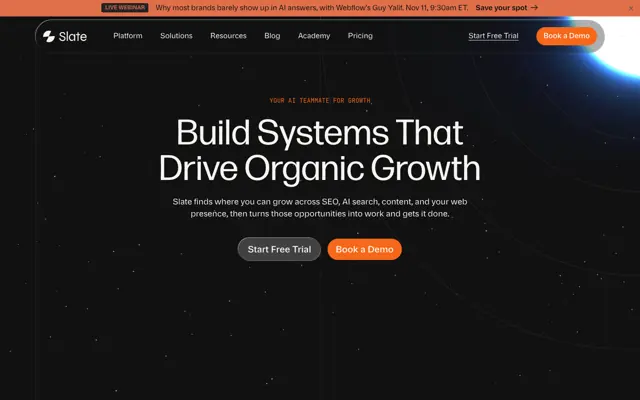
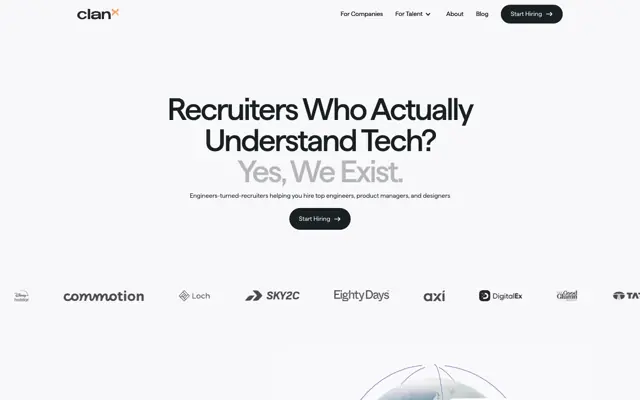
What should an AI startup website include?
An AI startup website should show the problem, show the product solving it with a real example, and answer the trust questions buyers have about data and accuracy. Then it should make the next step obvious: try it, join the waitlist or book a demo.
The best AI sites we see spend less time on adjectives and more time on outputs. A before and after, a sample report or a short loop of the interface does more than a paragraph of claims.
How to explain an AI product clearly
Start with the job, not the model. "Screens every applicant with a short voice interview" is clearer than "AI-powered talent intelligence".
- Name the user and the task in the hero.
- Show input, then output, in one view.
- Explain how it works in three or four plain steps.
- Say what it does not do. Limits build trust.
We often design the how it works section as a scroll story, where each step reveals the next part of the interface. It keeps people reading without hiding anything behind a play button.
Must-have pages for an AI startup
- Home with a clear one line answer and a product view above the fold
- How it works, with real inputs and outputs
- Use cases for each audience or workflow
- Pricing, or at least how pricing works and who to contact
- Security, privacy and data use
- About and team, because investors and early buyers read it
- Changelog or updates, which shows momentum
- Blog or research notes
Early stage? Start with a strong one page site and a waitlist, then grow into the full set. A landing page with us is $500 and usually takes about a week.
Trust, privacy and responsible AI signals
Buyers of AI tools ask the same questions every time. Answer them on the site before they ask.
- Is customer data used to train models?
- Which model providers do you use, and where is data processed?
- How is data stored, and for how long?
- Can a human review or override results?
Write only what is true today, keep it in plain words, and link to your full privacy policy and terms. A short, honest data page often shortens sales calls more than any feature section.
SEO and AEO for AI startups
Many buyers now ask an AI assistant which tool to use. Answer engines tend to cite pages that answer the question in the first lines, use clear headings and carry structured data. That is called answer engine optimisation, or AEO.
We write answer-first openings, add Organization, SoftwareApplication and FAQPage schema, keep pages fast and publish an llms.txt file that lists your key pages. We also make sure AI crawlers are allowed in robots.txt if you want to be found. More on this on our SEO, AEO and GEO page.
For classic search, use case and comparison pages work well. People search for the job they need done and for alternatives to tools they know.
Webflow or Astro for an AI startup?
Webflow is the fastest way to a polished launch site your team can edit visually. It suits teams where marketing or founders own the site.
Astro suits engineering-led teams who want the site in the same repo as the product, want custom interactive demos, or care about the lowest JavaScript and top speed. We pair it with Sanity for editing. Read Webflow vs Astro to compare, or see Astro and Sanity.
AI startup launch checklist
- Hero names the user, the task and the outcome
- At least one real product view or output on the home page
- Waitlist or demo form tested and routed to the right inbox or CRM
- Data and privacy section or page live
- Open Graph image ready for your launch post
- Schema, sitemap and llms.txt published
- Analytics events for sign-ups and demo bookings
- Speed checked on mobile, with heavy videos compressed or lazy loaded