


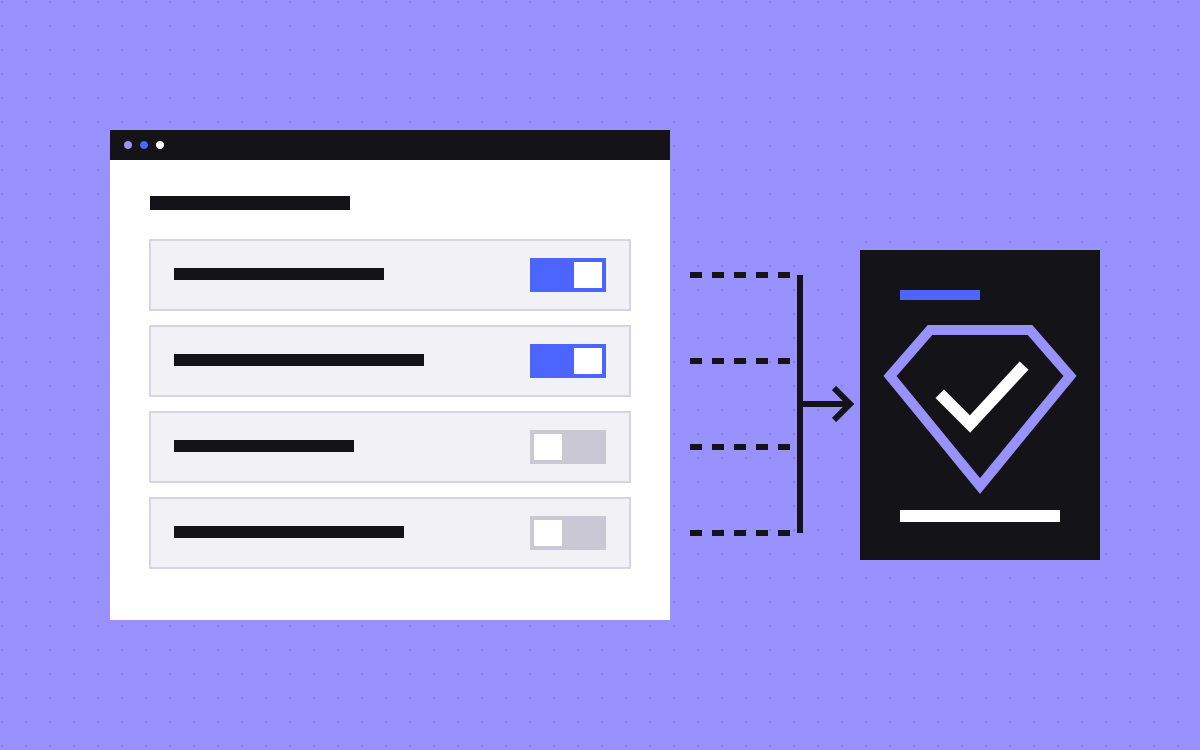
- Consent Mode v2 tells Google tags what a visitor chose, using four types: ad_storage, analytics_storage, ad_user_data and ad_personalization.
- Set a default for each type before any Google tag loads, on every page. If the order is wrong, the defaults do not work.
- Send an update as soon as the visitor chooses, and again if they change their mind. Most consent tools do this once Consent Mode is switched on.
- Basic mode blocks Google tags until a choice. Advanced mode loads them with consent denied and sends measurements without cookies. Which one fits is for your adviser.
- Check it in Tag Assistant: the earliest Consent event should show your defaults, the latest should show the update. This post is not legal advice.
The short answer
Google Consent Mode v2 is a way to tell Google tags what a visitor chose. You do two things. First, set a default for four consent types before any Google tag loads. Second, send an update the moment the visitor makes a choice in your banner. Then check both in Tag Assistant.
Consent Mode is not a banner. Google's help page says it does not provide a consent banner or widget. It works with the consent tool you already have. For choosing and placing that tool on a Webflow site, read our guide to cookie consent on Webflow. This post covers only the Google part.
This is general information, not legal advice. Which defaults you need, and where, is a question for a qualified adviser.
The four consent types
Google's consent mode overview lists the types. Four of them matter for analytics and ads on a marketing site:
| Type | What Google says it controls |
|---|---|
ad_storage | Storage, such as cookies, related to advertising |
analytics_storage | Storage, such as cookies, related to analytics, for example visit duration |
ad_user_data | Consent for sending user data to Google for online advertising purposes |
ad_personalization | Consent for personalized advertising |
The last two are the v2 additions. If your setup only sends ad_storage and analytics_storage, it is the older version and needs the other two added.
The same page lists three more types for other storage: functionality_storage, personalization_storage and security_storage. Many consent tools set these too.
Step 1: set the default before any tag loads
The default is what Google tags assume until the visitor chooses. Google's setup guide says no consent mode values are set unless you set them, and that the default call must run on every page before any measurement command such as config or event.
With the Google tag (gtag.js) straight on the page, it looks like this, placed above the Google tag:
<script>
window.dataLayer = window.dataLayer || [];
function gtag(){dataLayer.push(arguments);}

gtag('consent', 'default', {
  'ad_storage': 'denied',
  'ad_user_data': 'denied',
  'ad_personalization': 'denied',
  'analytics_storage': 'denied',
  'wait_for_update': 500
});
</script>
wait_for_update is optional. It tells tags how many milliseconds to wait for your consent tool to send an update before data is sent. It helps when the consent tool loads asynchronously.
Order is the part that breaks. Google's guide is direct: if the consent code is called out of order, the defaults will not work. Its debugging page adds that defaults should not be set asynchronously.
Step 2: send the update when the visitor chooses
When someone clicks Accept, Reject or saves their choices, your consent tool sends an update with the new values:
gtag('consent', 'update', {
  'ad_storage': 'granted',
  'ad_user_data': 'granted',
  'ad_personalization': 'granted',
  'analytics_storage': 'granted'
});
Three points from Google's guide:
- Send it straight away. Update as soon as the visitor uses the banner, not on the next page.
- Remember the choice. Store it and send the update again on later pages, so each page starts from the visitor's real choice.
- Changing their mind counts. The same update command, with
deniedvalues, withdraws consent. Your "Cookie settings" link should trigger it.
Most consent tools do all of this for you once Consent Mode is switched on in their settings. Your job is to check that they do.
If your tags run through Tag Manager
Most marketing sites load Google tags through Google Tag Manager, not directly. The idea is the same, with different parts:
- Use your consent tool's template. Google's Tag Manager consent help says consent tools can offer templates in the Community Template Gallery that use Tag Manager's consent APIs. It recommends those APIs over a Custom HTML tag with
gtag()calls, which may not be ready before the next trigger fires. - Fire it on Consent Initialization. This trigger exists so consent settings are in place before any other trigger fires. Keep it for the consent tag only.
- Turn on the consent overview. In Admin, Container Settings, under Additional Settings, select Enable consent overview. You then see each tag's consent settings in one list.
- Add consent to non-Google tags. Google tags have built-in consent checks. For other tags, set "Require additional consent for tag to fire" and pick the types, so the tag fires only when those are granted.
Consent Mode only talks to Google tags. A LinkedIn or Meta pixel will ignore it unless you add that last setting or hold the pixel back in your consent tool.
Basic or advanced mode
Google describes two ways to run Consent Mode. The difference is whether Google tags load before the visitor chooses.
| Basic | Advanced | |
|---|---|---|
| Tag loading | Blocked until the visitor uses the banner | Loads with defaults set to denied, unless you set otherwise |
| Before consent | No data is sent, not even the default consent status | Consent state and measurements without cookies are sent |
| Modelling in Ads | General model | Advertiser-specific model |
In short: basic sends nothing to Google until someone agrees. Advanced sends pings without cookies while consent is denied, and full measurement once it is granted. Google's Analytics help says it uses those pings to fill gaps with modelling.
Which one fits is a policy choice as much as a technical one. Google's own guide says to check your company's guidelines before you pick a method and defaults. Ask your adviser, write the answer down, and build to that.
Region defaults and two optional settings
You may not want the same default everywhere. The default command accepts a region list, using ISO 3166-2 codes for countries and subregions:
gtag('consent', 'default', {
  'ad_storage': 'denied',
  'ad_user_data': 'denied',
  'ad_personalization': 'denied',
  'analytics_storage': 'denied',
  'region': ['ES', 'US-CA']
});

gtag('consent', 'default', {
  'ad_storage': 'granted',
  'ad_user_data': 'granted',
  'ad_personalization': 'granted',
  'analytics_storage': 'granted'
});
Here visitors in Spain and California start as denied, and everyone else starts as granted. The rules, from Google's guide:
- A default with no
regionapplies to every visitor not covered by a region-specific default. - If a country and one of its subregions both have a default, the more specific one wins. A
US-CAdefault beats aUSdefault for visitors in California.
The codes above are only an example. Which regions get which default is for your adviser. Many consent tools set this from a regions screen, so you do not write the code by hand.
Google's guide also lists two optional extras. Both are off unless you turn them on:
url_passthrough. When cookies are denied, this passes ad click and session information between pages through URL parameters instead. If you use it, make sure your redirects keep those parameters.ads_data_redaction. When this is true andad_storageis denied, ad click identifiers sent by Google Ads and Floodlight tags are redacted. It has no effect whenad_storageis granted.
Treat both as decisions for whoever owns your privacy policy, not as defaults to copy.
Check it in Tag Assistant
Do not trust the banner. Follow Google's consent debugging steps:
- Open Tag Assistant and enter your site's URL. Your site opens in a new tab.
- In the Summary, select the earliest Consent event. The API Call section should show your defaults for all four types.
- Make a choice in the banner. Select the latest Consent event and confirm the values changed.
- Open a tag's Consent tab. The On-page Default and On-page Update columns show what was set on the page and what changed after the choice.
- Open the Tags tab and click each tag to see whether it followed the consent settings.
Then repeat with Reject, and again after changing your mind through the settings link. If the default does not appear first, the order is wrong: move the default call higher, or move the consent tag to the Consent Initialization trigger.
Tag Assistant shows Google tags only. For everything else, check the Network tab in your browser.
How common is tracking before a choice?
Very. In our own study, What do top cloud sites load before you click? (Forbes Cloud 100, checked 16 November 2026), 80% of the 99 home pages loaded at least one tracking tool before any click. 61% loaded a consent tool, and 47 of those sites still loaded ad pixels before any choice was made, as seen from India.
Read that with its limits. We loaded each page once from one machine in India, and consent tools can behave differently in the EU, the UK or US states. It is not a legal review, and it does not say any site broke a rule. It does show that having a consent tool and holding tags back are two separate jobs, which is why the Tag Assistant check matters.
What to do next
Write down your defaults by region, with your adviser. Switch on Consent Mode in your consent tool, make sure the default runs first, and check it in Tag Assistant with Accept, Reject and a changed mind. Recheck whenever someone adds a tag. Expect GA4 numbers to shift once tags respect the choice, and note the date in your reports.
The full setup, from measurement plan to monthly report, is in our free tracking playbook. Want us to set up and test the technical side? See analytics and tracking or send us your site. Your adviser still decides what you legally need.

Terms used: Core Web Vitals, AEO


