- Google does not ban AI content. It must meet the same Search Essentials and spam policies as any other content.
- The risk is many pages with no added value. That can count as scaled content abuse.
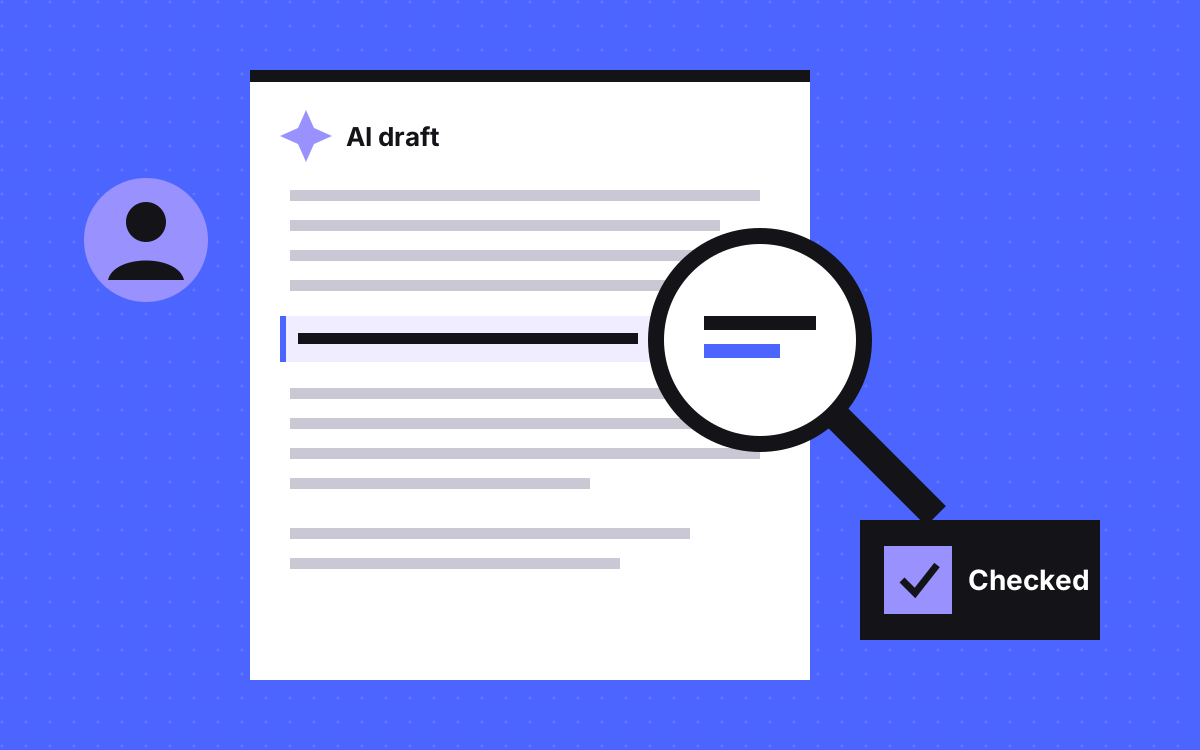
- Google says to fact check and review all AI text, including titles, descriptions, alt text and schema.
- AI is safest with your own facts as input, and riskiest when it has to invent expertise.
- Use the decision table and the six-point check before you publish.
The short answer
No, AI content is not bad for SEO simply because AI helped write it. Google's guidance allows it, as long as it meets Search Essentials and spam policies. It becomes bad for SEO when it adds nothing new, gets facts wrong, or is produced at scale mainly to manipulate rankings. So the real question is whether the page is useful and correct, and who checked it.
What Google actually says
- AI is allowed. Google even says generative AI can be useful for researching a topic.
- Scale without value is the risk. Its spam policies list using generative AI to make many pages without adding value for users as an example of scaled content abuse.
- Check the facts. Google points out that these models predict likely words and do not retrieve facts. It says all AI content should be checked by hand before publishing.
- The small fields count too. That same review applies to titles, meta descriptions, structured data and image alt text.
- Purpose matters. Its helpful content guide asks who made the content, how and why. It says "why" may be the most important of these.
- Fake authors backfire. Made-up names or AI headshots posing as real experts make a page untrustworthy.
The mistake in the question
"AI or human" is the wrong line to draw. A careless person can publish a thin page, and an AI tool given good source material can produce a useful first draft. The line that matters is between content that adds something and content that does not.
That links to what Google says about its AI features. Its guide says content with a unique point of view, such as first-hand experience, is likely to matter most. It also suggests creating content from what you know about the topic. A tool can help you write that down, but it has not done your projects, so the knowing has to come from you.
The decision table
Use this to decide how far AI should go on a given job.
| Job | Use AI? | Why, and what to check |
|---|---|---|
| Research and outlines | Yes | Fast and low risk. Check any source it names |
| First draft from your notes, call transcript or brief | Yes | The facts are yours. Check that nothing was added |
| Editing, shorter versions, plain language | Yes | Check that the meaning stayed the same |
| Titles, descriptions, alt text | Yes, reviewed | These can show in Search, so review each one |
| Schema markup | Yes, validated | It must match the visible page |
| Pages from structured data | With care | Each page needs distinct, useful data |
| Advice on health, money or law | Expert must lead | Google asks for high accuracy here |
| Case studies, results, testimonials | Only to tidy real text | Never let a tool create these |
| Many pages on keyword variations | No | This is the pattern the spam policy describes |
Six checks before you publish
- Would we publish this without search traffic? If the only reason is a keyword, stop.
- What is in here that a summary of other sites could not say? Name at least one thing: a detail from a project, a price, a recommendation, or a mistake you saw.
- Has a person checked every fact? Check numbers, product features, plan names, quotes, links and anything about the law against the source. Watch for AI hallucinations, as they read just as confidently as true sentences.
- Would the named author stand behind it? Show a real person with real background. See E-E-A-T.
- Does it sound like you? Cut stock openers and words you would never say on a sales call.
- Did the small fields get the same review? Check the title, description, alt text and schema.
A worked example
Say a Webflow agency wants a post on moving from WordPress. Here are two ways to use the same tool.
Weak prompt: "Write a 2,000 word SEO article on WordPress to Webflow migration." You get a page that could sit on any site. Worse, it may state product limits that are out of date, with total confidence.
Stronger process:
- Paste in your own checklist, notes from the last move, and the questions a client really asked.
- Ask for a draft that uses only that material, and that marks any gap with a note in place of a guess.
- Fill the gaps yourself, and read vendor docs for any product claim.
- Edit it until it sounds like you, then have the person named on it read it.
The second takes longer, but it gives you a page only you could have written. That is the difference that counts.
Warning signs on an existing site
- Many pages that say the same thing with a place name or keyword swapped. See thin content.
- A sudden jump in published pages with no one able to name who reviewed them.
- Authors with no real background, or who do not exist.
- Facts that disagree between pages, such as two different prices.
- Pages that get crawled but do not get indexed, or that bring no visits at all.
If you see these, do not panic and do not delete everything. Sort the pages into three groups: improve, merge with a stronger page, or remove. Use redirects for anything you merge.
Should you tell readers AI was used?
Google suggests explaining how content was made where readers would reasonably ask, including automation. It asks whether the use of AI is clear to visitors through disclosure or in other ways. On a how-to post edited by a named person, a note may add little. On a page that is largely automated, such as a data-driven report, a short note on how it was made builds trust.
Shops have firmer rules. Google Merchant Center asks for AI-made images and product data to be labelled, so check the current docs if you sell products. This is not legal advice, and rules on AI labelling differ by place. Ask a lawyer if it matters for your business.
How we use it
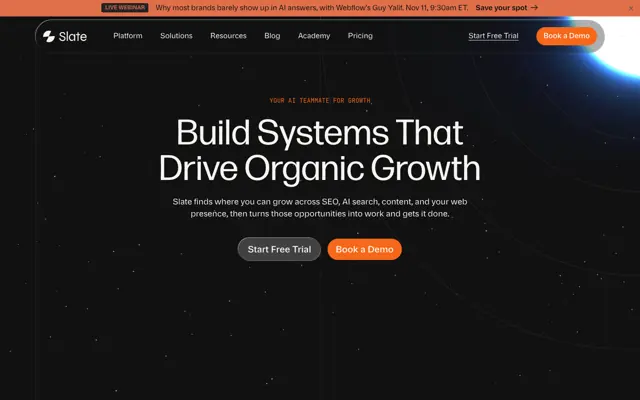
We use AI tools in our own work, and we still check product facts against vendor pages. On client work, the safest setup we have built is the one for Slate. There, AI builds pages from a Sanity section library, using content the team gives it, and hands back a staging link. People decide whether it goes live. Our posts on the AI page builder and on AI-built websites go further.
What to do next
Pick your last five published pages and run the six checks on them. Note which ones fail, and fix those first. If you want a hand with the plan or the words, see strategy and copywriting and SEO and AEO, or get in touch. We cannot promise rankings for any content, written by people or by AI.

Terms used: Core Web Vitals, AEO