- AEO, or answer engine optimisation, is the work of making your pages easy for AI answer tools to quote and cite.
- It builds on SEO. Answer engines still find pages through search indexes and crawlers, so the basics still matter.
- The core habits: answer the question first, use clear headings, add structured data and keep facts consistent across the web.
- Most B2B and service sites should do it, because buyers now ask AI tools for shortlists and comparisons.
- You cannot control what an AI says, but you can make your page the clearest, most quotable source on the topic.
What is AEO? The short answer
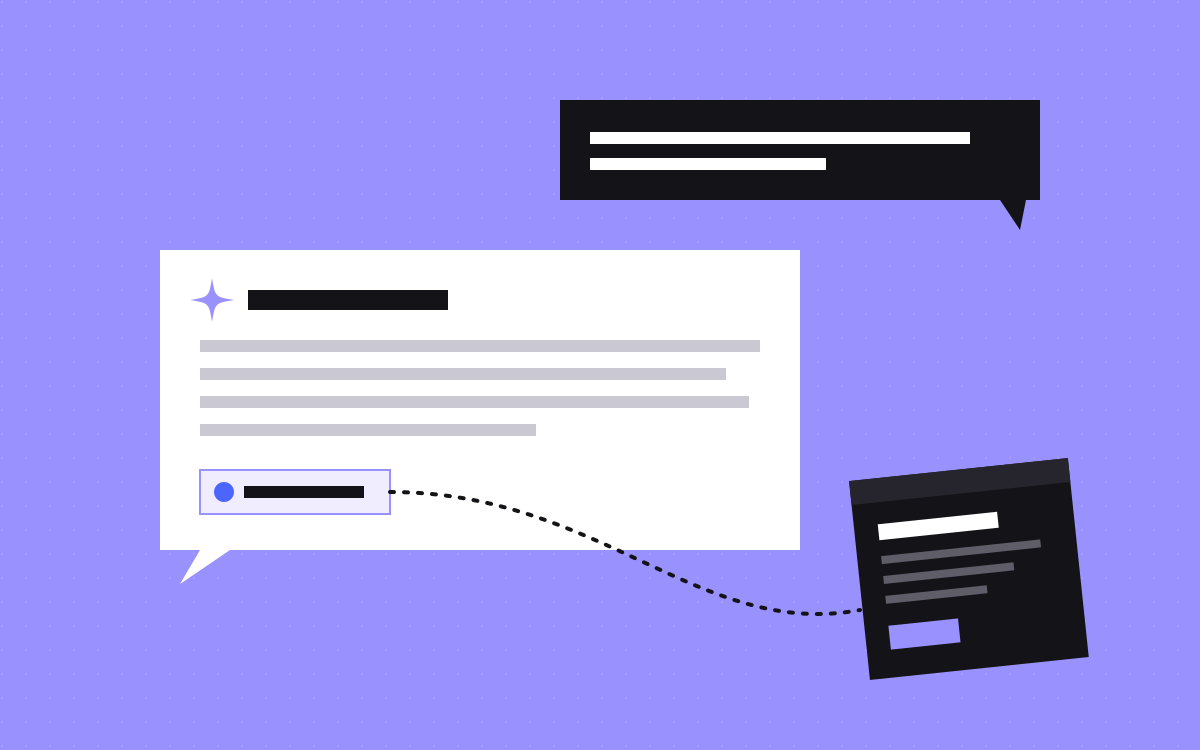
AEO, short for answer engine optimisation, is the practice of shaping your website so AI answer tools can understand it, quote it and cite it. Answer engines include ChatGPT search, Perplexity, Google AI Overviews, Gemini, Claude and Microsoft Copilot. Instead of showing ten links, they write an answer and point to a few sources. AEO aims to make your page one of those sources.
So, does your website need it? If people research your kind of product or service before they buy, yes. More of that research now starts with a question typed into an AI tool, not a search box. If your page is the clearest answer, you have a good chance of being named. If it is not, a competitor or a directory site gets the mention instead.
You will also see the term GEO, generative engine optimisation. In practice the two overlap almost completely. We use AEO for the habits that make a page quotable and GEO for the wider work of being mentioned across the web. Our SEO, AEO and GEO service covers both.
How answer engines pick their sources
Each tool works a little differently, and the details change often. The broad pattern is stable, though, and it is worth understanding.
- The question comes in. A user asks something like "best Webflow agency for SaaS startups" or "how do I move from WordPress to Webflow".
- The tool searches. Most answer engines run one or more web searches behind the scenes, using their own index or a partner search engine.
- It reads the top pages. It pulls text from a handful of results and looks for passages that answer the question directly.
- It writes an answer. The model combines what it found into a short reply and adds citations to the pages it leaned on.
Two things follow from this. First, you still need to rank in normal search, because that is where most answer engines start looking. Second, being on page one is not enough. Your page has to contain a passage that answers the question cleanly, in a form a model can lift and trust.
AEO vs SEO: what is the difference?
AEO is not a replacement for SEO. It is a layer on top. Here is how they compare.
| Feature | SEO | AEO |
|---|---|---|
| Goal | Rank in search results and earn the click | Be quoted or cited inside an AI answer |
| Unit of success | A page ranking for a query | A passage or fact being used in an answer |
| Main signals | Relevance, links, technical health, intent match | All of SEO, plus clear answers, structure and consistent facts |
| Measurement | Rankings, clicks, impressions | Citations, brand mentions, referral traffic from AI tools |
| Content style | Covers the topic well | Covers the topic well and states the answer plainly, early |
The good news is that most AEO work also improves SEO. A page that answers the question in its first two lines is better for humans too. Nobody likes scrolling past a long intro to find the point.
The five habits of an AEO-ready page
We build every page on our own site, and every page we ship for clients, around five habits.
1. Answer first
Open each page or section with a one or two sentence answer that uses the exact question people ask. Then explain. Models often lift that first passage word for word.
2. Headings that match real questions
Use H2s that read like the questions your buyers type. "How long does a Webflow migration take?" is better than "Timelines". It helps both search and answer engines map a passage to a query.
3. Structured content
Lists, steps and tables are easy for models to read and reuse. A comparison table often becomes the backbone of an AI answer about two options.
4. Structured data
Add JSON-LD schema for your Organization, Services, FAQs, Articles and breadcrumbs. It gives machines a clean summary of who you are and what the page is about.
5. Consistent facts everywhere
Your prices, location, services and founding story should match on your site, your LinkedIn page, directory listings and review sites. When sources agree, models are more confident in repeating the fact.
Technical AEO: let the right bots in
Answer engines can only quote what they can read. A surprising number of sites block AI crawlers by accident, or hide their content behind heavy JavaScript.
- Check robots.txt. Look for rules that block crawlers such as GPTBot, OAI-SearchBot, ClaudeBot, PerplexityBot or Google-Extended. Decide on purpose which ones you allow. Some are for search features, some are for model training, and you can treat them differently.
- Serve real HTML. If your main content only appears after JavaScript runs, some crawlers will see an empty page. Static or server-rendered HTML is the safe choice.
- Keep pages fast. Slow pages get crawled less often.
- Publish a clean sitemap. List every page you want found, and keep it updated.
- Consider llms.txt. It is a proposed convention, not a standard, for giving AI tools a plain map of your site. We explain it in our llms.txt guide.
Both Webflow and Astro output clean HTML, which is one reason we build on them. On Astro, almost all of the page ships as plain HTML with very little JavaScript, which suits crawlers well.
Content that gets cited
Some content types get cited far more than others. In our work, these earn the most mentions:
- Clear definitions. "What is X" pages with a crisp answer at the top.
- Comparisons. Honest "X vs Y" pages with a table and a plain verdict, like our Webflow vs Astro page.
- Pricing pages with real numbers. Models love a concrete figure. A page that says "website from $2,500" is easier to quote than "contact us for a quote".
- Step-by-step guides. Numbered steps are simple to reuse in an answer.
- Original data or experience. Something only you know, like what you saw across many projects, is hard for anyone else to copy.
Write the sentence you would want an AI to say about you. Then make sure that sentence, word for word, is on your site, and that it is true.
Off-site signals: GEO in practice
Answer engines do not only read your site. They read what others say about you. That is where GEO comes in.
Focus on places that are often used as sources: review platforms, partner directories, industry roundups, podcasts with transcripts, and well-known community sites. A mention on a respected list can matter more than another blog post on your own site.
Keep it honest. Ask happy clients for reviews where your buyers look. Keep partner profiles current. Pitch real expertise to writers who cover your field. There is no shortcut that lasts, and fake reviews or spammy listings can hurt you far more than they help.
How to measure AEO
Measuring AEO is still rough. No tool gives you a perfect picture, because AI answers change from one ask to the next. Here is a practical setup.
- Track AI referrals. In your analytics, group visits that come from chatgpt.com, perplexity.ai, gemini.google.com, copilot.microsoft.com and similar sources. Watch the trend, not single days.
- Run a monthly prompt check. Write 15 to 25 questions your buyers ask. Run them through the main tools once a month. Note whether you are named and which page is cited.
- Ask new leads. Add "How did you hear about us?" to your forms, with "ChatGPT or another AI tool" as an option. People are happy to tell you.
- Keep watching search. Rankings and impressions in Search Console still lead the way, because answer engines lean on search results.
Common AEO myths
AEO is new enough that a lot of advice about it is guesswork. These are the claims we hear most, and what we have seen in practice.
- "SEO is dead." It is not. Most answer engines search the web before they answer, and they lean on pages that already rank. Weak SEO usually means weak AEO.
- "You need a special AEO tool." Tools can help you track mentions. The work itself is writing clear pages, adding schema and keeping facts consistent. No tool does that for you.
- "Write for robots, not people." The opposite works better. Models are trained to prefer text that reads naturally and answers well. Stuffed, robotic copy is easy to spot.
- "Only big brands get cited." Small, focused sites get cited all the time, because they often answer narrow questions better than big generic ones.
- "One trick will get you in." There is no single file, tag or prompt that guarantees a citation. AEO is many small habits done well.
An AEO page, before and after
Here is a simple example from a service page, rewritten for answer engines. The topic is the same. The structure is not.
Before
The page opens with a big slogan, then three paragraphs about the company's passion for quality. The price is hidden behind a "Get a quote" button. The FAQ is an image. The headings say "Our approach", "Why us" and "Let's talk".
After
- The first line says what the service is, who it is for and what it costs, in plain words.
- Headings become questions: "How long does it take?", "What does it cost?", "What do I need to provide?"
- A short table compares the three package options.
- The FAQ is real text, with FAQPage schema that matches it.
- Service and Organization schema describe the business in JSON-LD.
The after version is not longer. It is clearer. A person can scan it in ten seconds, and a model can lift any section as a clean answer. That is what AEO looks like in practice: less decoration around the facts, more facts where people expect them.
Does your website need AEO? A quick test
Answer these five questions about your site:
- Does each key page answer its main question in the first two sentences?
- Do your headings read like the questions buyers ask?
- Do you have JSON-LD schema for your organisation, services and FAQs?
- Does your robots.txt allow the AI crawlers you want, on purpose?
- Are your prices, services and location the same on every site that mentions you?
If you answered no to two or more, you have quick wins waiting. Most of them take days, not months, and they help your normal search traffic too.
We set up AEO on every site we build in Webflow or Astro, and we run it as a standalone project for existing sites. Small fixes start at $35 an hour, and larger audits get a fixed quote after a 20 minute call. Book a call and we will show you where you stand.

Terms used: Core Web Vitals, AEO